


Real-time marketing automation campaigns depend on speed, data quality and clear orchestration. For iGaming and fintech CRM teams, the challenge is rarely sending more messages. The challenge is responding to live behaviour with relevant journeys, across every channel, while users are still engaged.
This guide covers the seven biggest blockers to real-time campaign execution and gives practical fixes for data latency, integration, orchestration and personalisation at scale.
First things first
Your users move in seconds.
- A player abandons registration.
- A trader reacts to a market shift.
- A customer reaches a risk point.
- A loyal user shows signs of churn.
Every one of these moments creates an opportunity. The value comes from how fast your platform responds and how relevant the response feels. That is where real-time marketing automation campaigns matter.
For CRM and retention leaders in iGaming and fintech, automation needs to do more than schedule emails or trigger generic journeys. It needs to connect live data, understand behaviour, coordinate channels and adapt every interaction to the user.
The problem is execution.
Many teams have the tools. They have the data. They have the strategy. Still, campaigns arrive late, journeys overlap, personalisation feels basic and reporting stays fragmented.
Here are the seven most common marketing automation challenges holding teams back, and how to fix them.
1. Data latency slows every customer moment
Real-time campaign execution depends on live data.
When customer events reach your marketing platform late, the moment loses value.
- A player might complete a deposit, enter a live event or show churn signals.
- A trader might follow a price movement, open a position or become inactive during a key market window.
If the data arrives minutes or hours later, the campaign feels disconnected.

What causes the problem
Data latency usually comes from operational gaps, not strategy gaps.
The most common causes include batch data updates, slow CRM syncs, disconnected systems, manual exports, developer dependency and delayed event processing.
How to fix it
Move from batch-based automation to event-led automation workflows.
Your CRM platform should receive and act on behavioural, transactional and operational data as close to instantly as possible.
Start by mapping the events that matter most to activation, retention and loyalty. Then decide which events need real-time triggers and which are only useful for reporting. Remove manual exports from high-value journeys and prioritise live event streams where timing affects performance.
Where Solitics fits
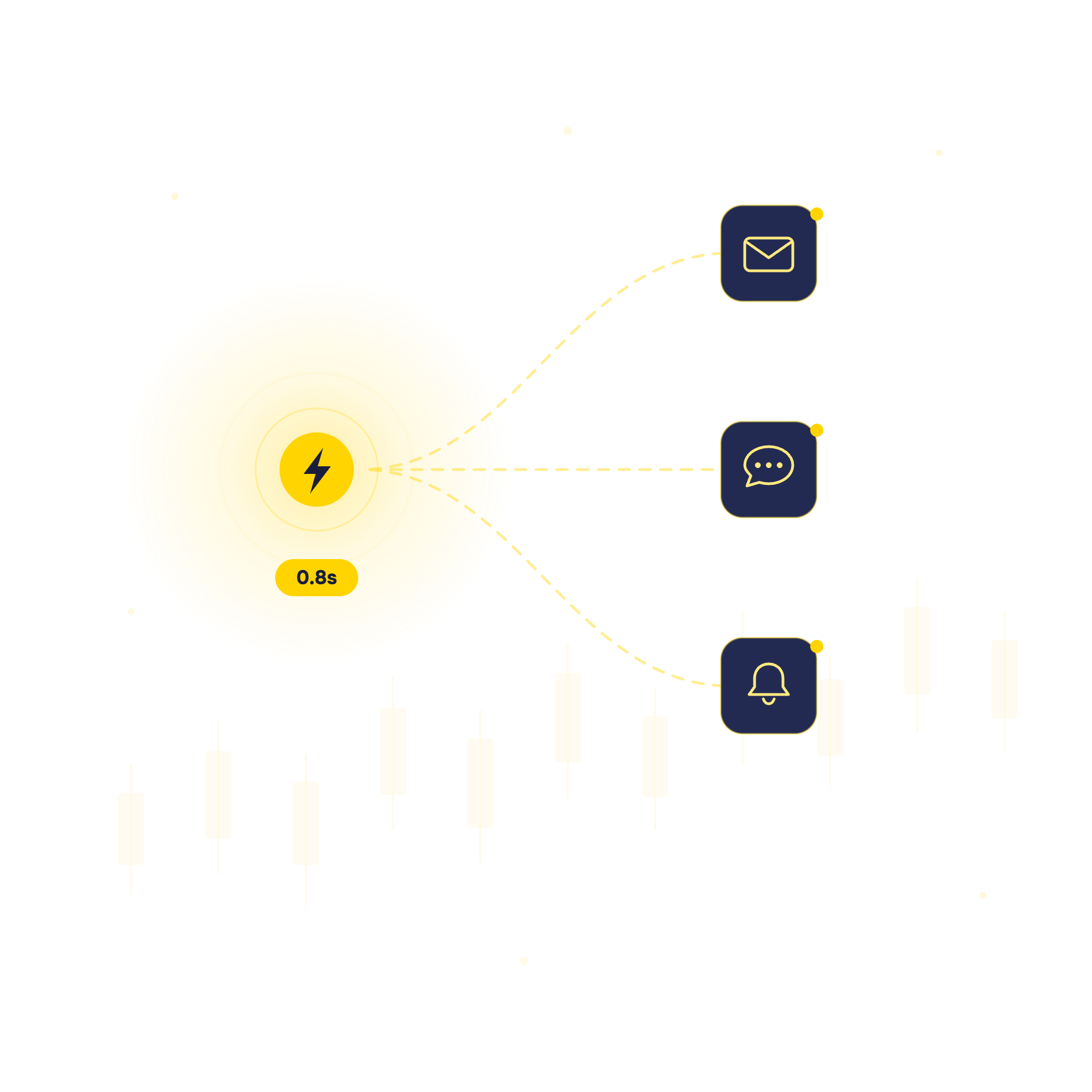
With The Solitics platform, teams connect their data and turn it into hyper-personalised user journeys in real time. This allows team to respond to user behaviour, system events and market triggers within 0.8 seconds.
2. Integration gaps create broken journeys
Many marketing automation challenges start outside the campaign builder.
CRM teams need data from registration flows, payment systems, product activity, trading platforms, sports feeds, risk tools, price updates, market events, loyalty engines and communication channels.
When these systems do not work together, automation becomes limited.
Integration gaps also create pressure on developers. Every new campaign request becomes a technical task, which slows CRM teams and limits testing.
How to fix it
Build campaign execution around unified data access.
A practical starting point is to audit every data source used in live CRM journeys. Identify which sources update in real time and which do not. Then create one campaign-ready view of the user, so your team does not need one-off integrations for every journey.
Where Solitics fits
The Solitics platform connects to your data sources agnostically, brings them together and makes them available for real-time journeys, automation workflows and personalisation at scale.
Using self-learning algorithms and AI, Solitics helps your data work together across systems, channels and user touchpoints. That means CRM teams can build smarter journeys, act on live behaviour and move towards activation, retention and loyalty goals without creating a new technical project for every campaign.
3. Campaign orchestration becomes too complex
As automation grows, journey logic becomes harder to manage.
- Welcome journey
- Churn journey
- Deposit journey
- Loyalty journey
- Live event journey
- Promotion journey
- Risk-based journey
Each one makes sense on its own. Together, they create conflicts.
A user might receive too many messages. One journey might override another. A user might get a reactivation message while already active or receive an irrelevant offer after their interest has changed.
This is where campaign orchestration becomes critical.
How to fix it
Shift from campaign-by-campaign planning to journey governance.
Every automated journey should follow clear rules for priority, eligibility, frequency, suppression, entry logic and exit logic.
This gives your CRM team full control over which message wins when several journeys apply to the same user.
Set journey priority by business goal. Use frequency caps across all channels. Add exclusions to prevent conflicting messages. Review journey overlap before launch. Then track performance at journey level, not only message level.
Where Solitics fits
Solitics supports automated user flows based on behaviour and events. It is built for real-time, KPI-driven journeys with precise targeting, flexible triggers and deep personalisation.
4. Teams automate tasks instead of outcomes
For CRM and retention leaders, automation workflows need to connect to outcomes. In iGaming and fintech, those outcomes usually include visitor activation, registration completion, first deposit, repeat deposit, product adoption, churn prevention, loyalty and lifetime value.
If automation focuses only on tasks, teams measure activity instead of impact.
How to fix it
Start every journey with a business goal and key performance indicator (KPI).
Automation should help the team move faster, but speed only matters when it improves the right metric.
- Define one primary goal for each journey.
- Connect every trigger to a measurable user action.
- Remove campaigns with unclear value.
- Use control groups where relevant.
- Review results by journey, segment and channel.
The most important shift is this: Optimise based on what users do after the message, not only opens and clicks.
5. Channel coordination breaks the user experience
Real-time marketing automation campaigns often run across emails, SMS, popups, in-app messages, push notifications and WhatsApp.
The problem is coordination.
When each channel works in isolation, users get fragmented experiences. They might receive the same message twice, miss the most relevant channel or get a campaign after they have already acted.
In regulated industries, channel coordination also affects compliance, consent and user trust.

How to fix it
Manage channels from one orchestration layer.
Every journey should decide the best next action based on user behaviour, channel preference, consent, urgency and business priority.
Where Solitics fits
Solitics offers omnichannel communication which gives teams a centralised layer for delivering messages across multiple channels, helping brands reach users with consistent, coordinated messaging wherever they are.
Better channel coordination means fewer wasted messages and a more relevant user experience.
6. Teams lack the speed to react to live opportunities
Some campaign moments cannot wait for the next planning cycle. Examples include live match changes, market shifts and user actions.
Traditional automation struggles here because campaign setup, data access, segmentation, content and approvals take too long.

How to fix it
Give CRM teams the tools to create, adjust and optimise journeys without developer dependency.
Speed needs to exist at three levels:
- Fast setup: Teams launch journeys without waiting weeks for technical work.
- Fast response: Campaigns react to live behaviour while the moment still matters.
- Fast optimisation: Teams see what works, adjust quickly and improve performance.
Speed starts with connected, actionable data. If your CRM team cannot access live behavioural, transactional and product signals, real-time campaign execution is not really possible. Once that data foundation is in place, teams can use event-based triggers, visual journey builders, pre-approved templates, real-time reporting and AI support to launch, adjust and optimise journeys faster.
Where Solitics fits
The Solitics feature Market Pulse helps trading brands deliver personalised offers and messages that react instantly to market movements, price changes and key trading moments while traders are still active.
In-Game Pulse supports personalised live sports updates that react instantly to goals, score changes and key moments while players are still active.
The AI Expert adds another layer of speed. CRM teams can ask questions, turn goals and KPIs into vertical-specific strategies and generate journeys, segments and logic directly within the Solitics platform. That helps teams create, analyse and optimise journeys faster, using natural language instead of waiting for technical support.
This is where real-time campaign execution becomes a competitive advantage.
How to build better real-time marketing automation campaigns
The strongest automation strategies share the same foundations:
- Live data.
- Connected systems.
- Orchestrated journeys across channels.
- Personalisation based on behaviour.
- Measured outcomes.
This way, they can always respond to the right user, with the right message, at the right moment.
Here’s a practical framework:
-
Start with the customer moment
Define the user action or signal that matters. Examples include registration abandonment, first deposit, churn risk, market interest or live event activity.
-
Connect the data
Make sure the journey has every data point needed to act with accuracy.
-
Define the outcome
Choose one primary KPI. Keep the journey focused.
-
Set the orchestration rules
Decide priority, exclusions, frequency and channel logic.
-
Personalise the experience
Use live behaviour, product interest and user state to shape the message.
-
Automate the next best action
Trigger the journey in real time and adapt it as the user responds.
-
Measure and improve
Review performance across the full journey, then optimise fast.