





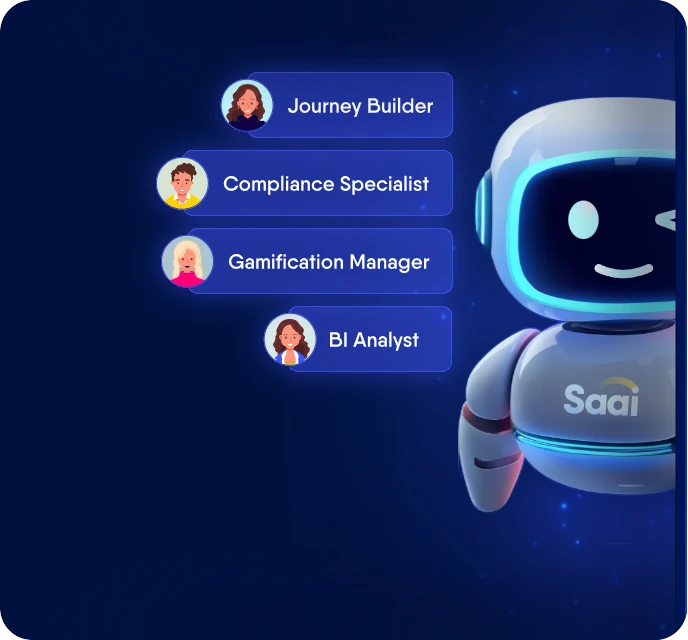


Solitics’ agentic AI is not another AI assistant. It is the operating layer for real-time customer engagement. We call her Saai.
There is a lot of noise in the market right now.
Everyone has an AI story. Everyone says they are ‘agentic’. Everyone wants to connect an external AI assistant to their platform through MCP and call it transformation. Let’s be clear: MCP is useful, and general-purpose AI assistants are powerful. They can help teams summarise information and draft campaigns. They can also analyse data and help teams move faster.
But for serious customer engagement, that is not enough. For Solitics, the real question is not whether AI can answer a prompt. The real question is whether AI can operate safely, intelligently and measurably inside the customer journey. That is where Saai is different.
MCP connects. Solitics operates.
MCP is mainly a connection layer. It allows an external AI tool to access data, tools or workflows inside another system.
That is valuable, but it is not the same as intelligence being embedded inside the platform itself.
An MCP-first model usually looks like this:
- External AI tool
- Platform data or actions
- Connector
- Drafts, summaries or recommendations
Saai is built inside the customer engagement platform itself. That’s where native data, real-time triggers and permissions already come together. Journeys, campaigns and promotions run there too, along with goals, reporting and governance. So intelligent action can happen where customer engagement is already managed.
That distinction matters. MCP gives AI access. Solitics gives AI operational context. And in real-time engagement, context is everything.
External AI is helpful. Embedded AI is accountable.
A marketer can ask a general-purpose AI assistant to write a campaign. They can ask an MCP-connected assistant to pull data or draft a journey. That may save time. But enterprise marketing teams do not only need faster drafts. They need answers to harder questions:
-
Is this customer eligible?
-
Is this brand separated from other brands?
-
Is this segment fresh?
-
Does this journey have a goal?
-
Is this trigger based on live data?
-
Can performance be measured?
-
Is the user opted out?
-
Who approved the action?
-
Is this offer allowed in this market?
-
What happens if the customer enters another journey at the same time?
These are not prompt problems. They are operating problems. That’s why we believe agentic AI belongs where those decisions already live: Inside the customer engagement platform.
Real-time engagement cannot be bolted on
Many AI solutions work as request-response tools: A user asks a question, and the AI responds. That can be useful for productivity, but customer engagement is not only a productivity challenge. It happens in live moments, such as when a customer completes KYC, a deposit fails, a player becomes active in-app, a trader reacts to market movement, a customer abandons onboarding, a loyalty milestone is reached or a risk and compliance signal appears.
In those moments, the platform needs to decide what should happen next. Not tomorrow. Not after someone writes a prompt. Now.
Saai does more than help teams create campaigns. She helps them move customers through measurable lifecycle stages.
That is a much higher-value role.
Start from the goal, not the task
Many AI tools are good at single tasks, like creating a segment or drafting an email. That’s useful, but it’s still limited.
The bigger idea is to start from the goal. Instead of asking AI to write a win-back email, you tell it what you want to achieve: Bring back players who haven’t deposited in 30 days. From there, the work is to find the right customers and the right moment, then deliver the right message on the right channel. Finally, you measure whether they came back and improve what happens next.
That is the difference between creating marketing assets and moving customers forward.
For iGaming, Online Trading and Retail Banking brands, this matters. They don’t win by sending more campaigns. They win by activating, retaining and growing customers at the right moment.
That’s the environment Saai is designed for.
Governance is not a feature. It is the foundation.
The strongest AI system is not the one that can do the most things. It is the one that can do the right things, under the right controls, with the right visibility.
This is where external AI workflows can become risky for larger organisations.
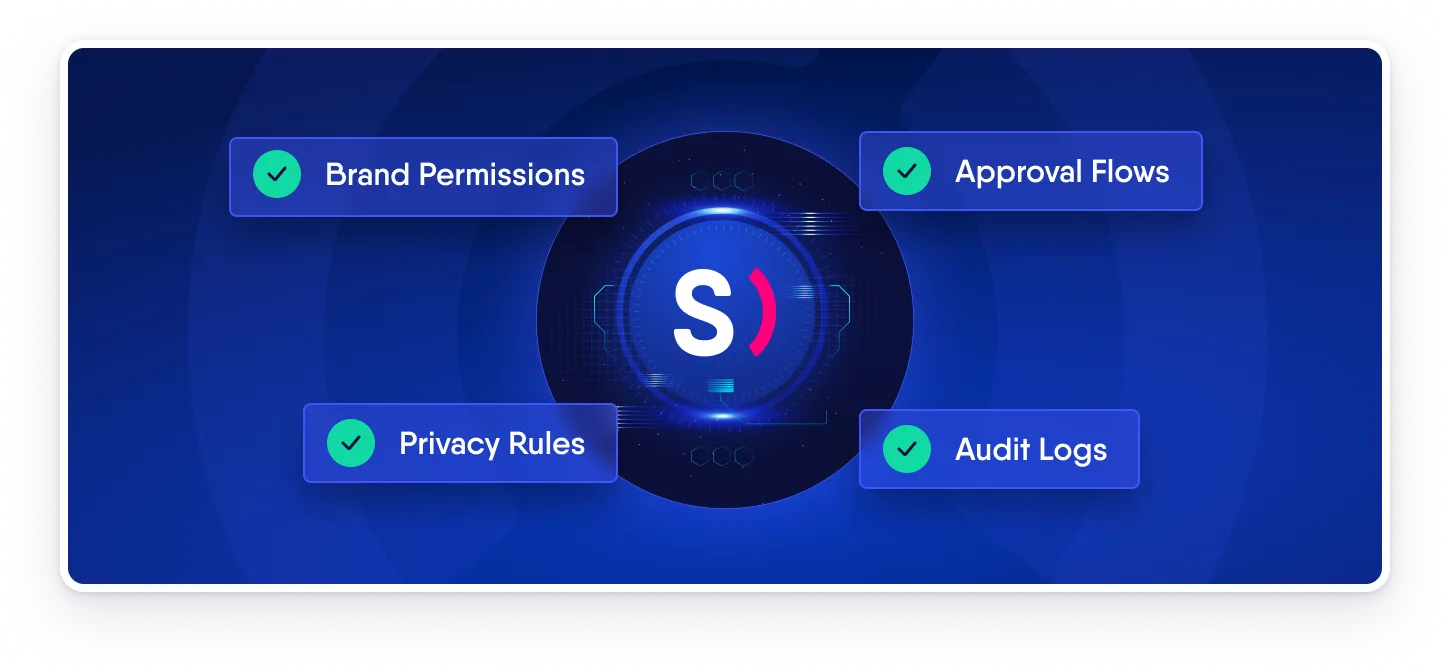
Different teams may use different AI tools. Prompt histories may sit outside the platform. Approval logic may be inconsistent. Compliance teams may struggle to understand why an action was recommended or taken.
That’s why we believe governance has to be built into the engagement workflow itself.
Inside the platform, AI can work within:
- User roles
- Privacy rules
- Brand permissions
- Customer eligibility
- Approval flows
- Market restrictions
- Audit logs
- Journey goals
- Opt-outs and blocked users
- Campaign measurement
For enterprise teams, this is not a minor detail. It is the difference between an AI experiment and an AI operating model.
Solitics is built for multi-brand complexity
Many Solitics customers operate across multiple brands and markets, often with several products or licences. That adds complexity that generic AI tools do not naturally understand.
An external assistant may need constant instruction:
-
Which brand are we working in?
-
Which users can access this brand?
-
Which campaigns belong here?
-
Which customers are excluded?
-
Which compliance rules apply?
-
Which data must remain separated?
Solitics already understands that operating reality. Multi-brand structure, permissions, data separation, journeys, segments and configurations are part of the platform context.
That gives Saai a major advantage.
She does not need to guess the operating model from a prompt. She can work inside it.
Solitics goes beyond campaigns
Most AI tools stop at marketing production: Drafting emails, building audiences or suggesting campaign ideas.
Solitics is built for real-time lifecycle execution. It helps teams decide what should happen next for each customer, deliver that interaction across the right experience and measure whether it changed behaviour.
That means teams are not just creating more campaigns. They are moving customers forward with more control, speed and measurable impact.

The tough truth
MCP is not the enemy, and neither are general-purpose AI assistants. They are powerful tools.
But they are horizontal tools. By themselves, they are not a governed, real-time customer engagement platform. Saai is different because she is built around the actual work lifecycle that teams need to execute: Data, triggers, segments, journeys, campaigns, promotions, gamification, compliance, measurement and optimisation.
That is the difference between an assistant and an operating layer.
The bottom line
MCP helps external AI tools connect to a platform. Saai helps teams govern, orchestrate, and optimise customer engagement from inside the platform.
For organisations that only want faster drafts, external AI may be enough. But organisations that need real-time action need more. They need AI that works across brands, under clear governance, with outcomes they can measure. That’s why we built Saai.
Because in customer engagement, the winner will not be the company with the cleverest prompt. The winner will be the company that can turn customer data into the right action, at the right moment, with control, speed and measurable impact.